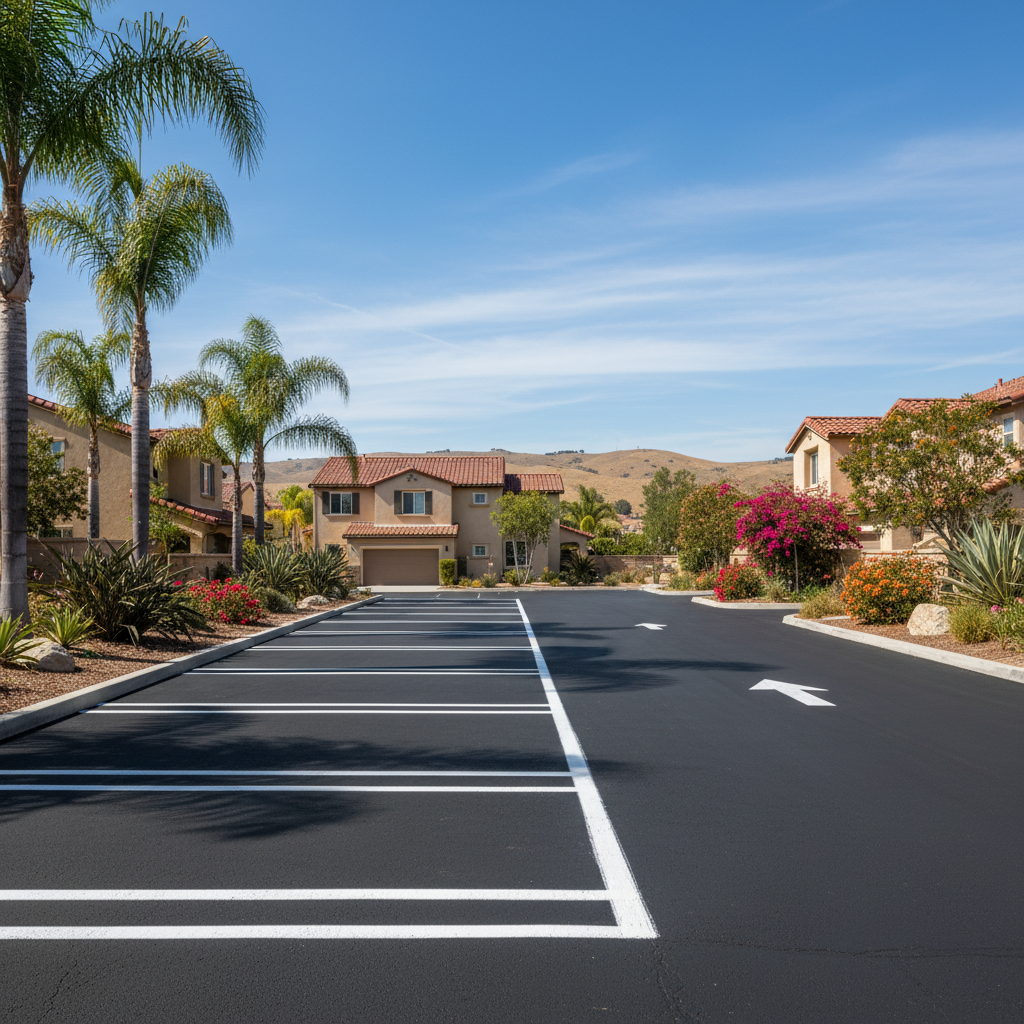
You'd think getting some lines painted on asphalt would be pretty straightforward, right? Honestly, you'd be surprised. I’ve been doing this a long time here in Anaheim, and I’ve seen my share of botched jobs and homeowners — totally frustrated — who just didn't know what to look out for. It’s not just about slapping some paint down; there's a real art and science to it, especially if you want it to last and actually look good.
Mistake #1: Not Knowing Your Local Codes
This is a big one, and it can really bite you. Especially if you're dealing with a multi-unit property, a home-based business, or even just a long private driveway that serves multiple vehicles. Anaheim has specific codes for everything from accessible parking spaces (ADA compliance) to fire lane markings. You can't just guess, can you? I've seen folks get fined because their 'handy' friend painted lines that weren't up to snuff. Before anyone even touches a paint sprayer, you need to know what's required for your specific property. A good contractor, like us at Valley Asphalt Company, will usually help you figure this out, but ultimately, it's your responsibility. Don't assume. Ask.
Mistake #2: Focusing Only on the Lowest Bid
Look, I get it. Money talks. Everyone wants a good deal. But when it comes to asphalt striping, the cheapest bid is almost never the best. There’s a reason it’s cheap. Maybe they’re using low-quality paint that’ll fade in six months under our intense Anaheim sun. Perhaps they’re cutting corners on prep work, which means the paint won't stick properly. Or maybe they're just not licensed and insured, which puts you at huge risk if something goes wrong. Ask for references. Ask about the type of paint they use. Ask about their experience. A professional job might cost a little more upfront, but it’ll save you a headache and more money in the long run when you don’t have to redo it in a year.
Mistake #3: Skipping the Prep Work
This is where a lot of DIYers and inexperienced contractors fall short. You can’t just paint over dirt, oil, or loose debris. The asphalt needs to be clean, dry, and free of anything that would prevent the paint from sticking. If your parking lot has old, faded lines, sometimes those need to be removed or blacked out first for a crisp, clean new layout. If there are cracks or potholes, those should really be repaired before striping, otherwise, your new lines will just follow the imperfections and look terrible. Think of it like painting a wall in your house – you wouldn't paint over peeling old paint or a dirty surface, would you? Same principle applies here.
Mistake #4: Not Considering the Layout and Flow
This is more than just putting down lines; it's about making your parking area functional and safe. I've seen driveways and small lots in places like the Anaheim Colony Historic District where people just guess at parking space sizes, and suddenly you have cars bumping into each other or blocking access. A good striping plan considers:
- How many vehicles need to park?
- What's the typical size of those vehicles?
- How do cars enter and exit the property?
- Are there any pedestrian walkways that need to be marked?
- Do you need directional arrows or 'No Parking' zones?
A professional will help you make the most of your space, ensuring smooth traffic flow and maximizing parking spots without creating bottlenecks. It’s not just about legality; it’s about practicality and safety for anyone using your property.
Mistake #5: Ignoring Weather Conditions
You wouldn't believe how many times I've seen people try to stripe when it's too cold, too hot, or when rain is expected. Paint needs specific conditions to cure properly. Here in Anaheim, especially during our hotter months, applying paint in the middle of a scorching afternoon can lead to premature drying on the surface, which can cause cracking or poor adhesion later. Conversely, if it's too cold, the paint might not cure at all. And obviously, rain is a no-go. A reputable contractor will schedule the work when conditions are ideal for the specific type of paint they’re using. Don’t rush the job just to get it done; wait for the right weather.
So, before you jump into that striping project, take a step back. Do your homework, ask the right questions, and don't be afraid to invest in quality. You'll be glad you did.